
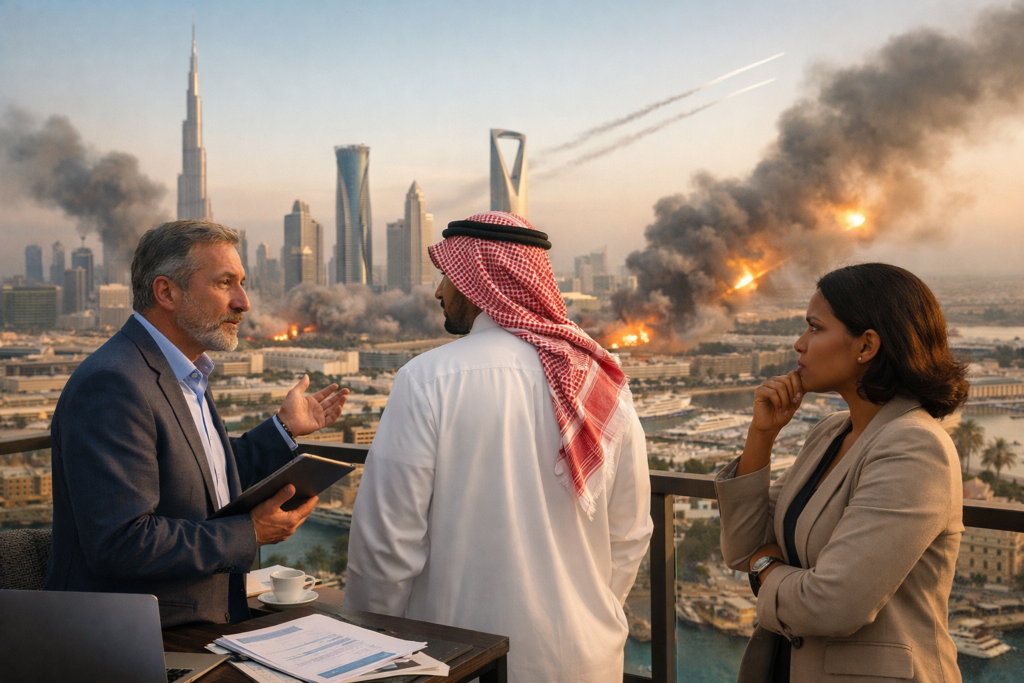
For years, cities like Dubai, Doha, and Riyadh have been considered some of the most attractive destinations for global real estate investment. Strong infrastructure, growing international populations, and ambitious development plans have helped position the region as a major property hub.
However, recent geopolitical tensions in the region, particularly the escalation involving Iran, Israel, and the United States, have sparked new conversations among investors. When conflicts affect travel, investor confidence, and regional stability, they can influence sectors connected to real estate such as tourism, infrastructure development, and international business activity.
At the same time, many Middle Eastern economies continue to push forward with large-scale urban projects, economic diversification strategies, and policies designed to attract foreign investors. This raises an important question about how investors should interpret risk in today’s environment.
Real estate in the Middle East may still present opportunities, but the conversation around security, long-term stability, and geopolitical risk is becoming more relevant than ever.
So the question for investors is simple:
Do you still consider real estate in the Middle East a safe investment in the current global climate?
Share your thoughts below.